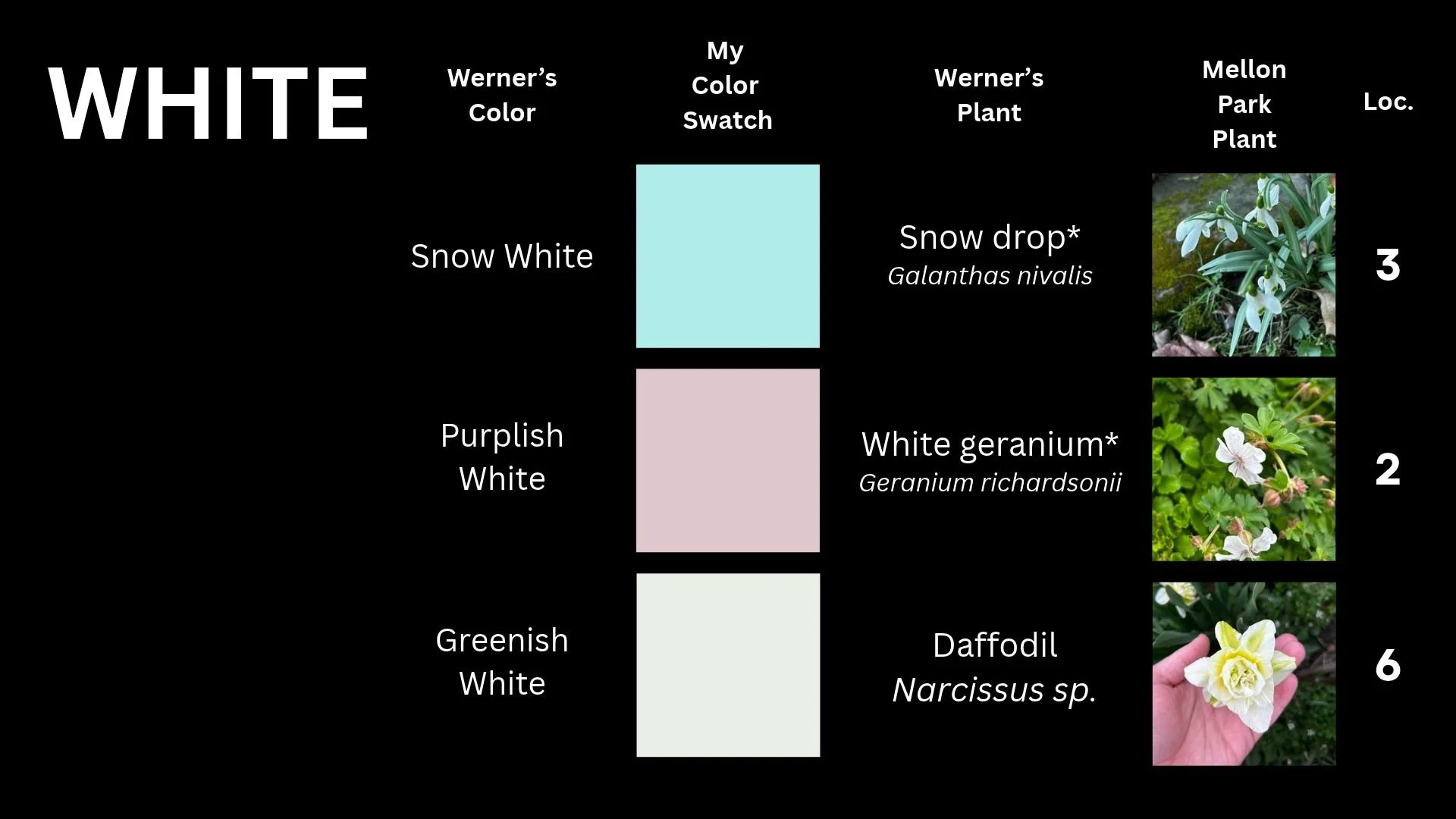
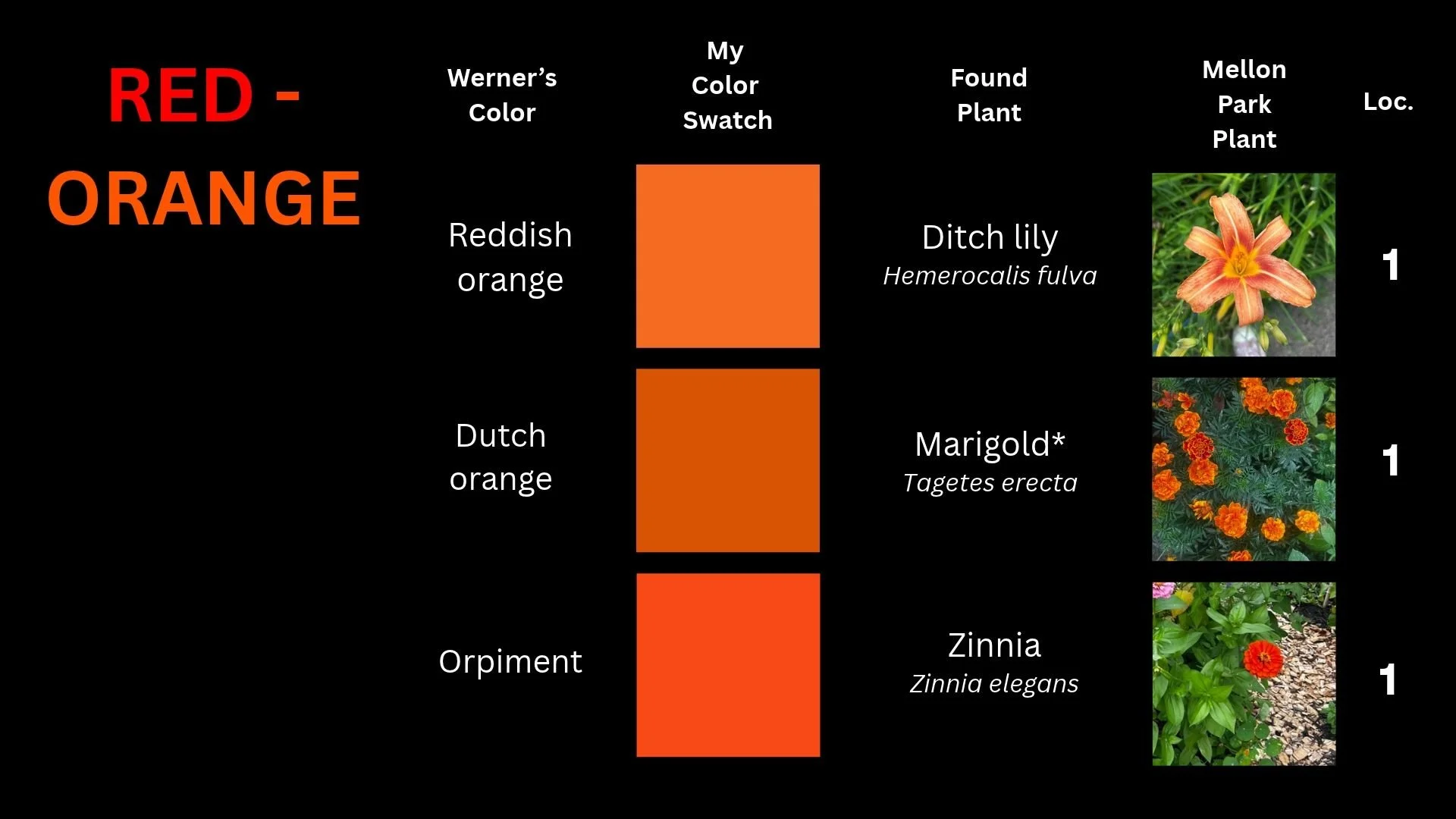
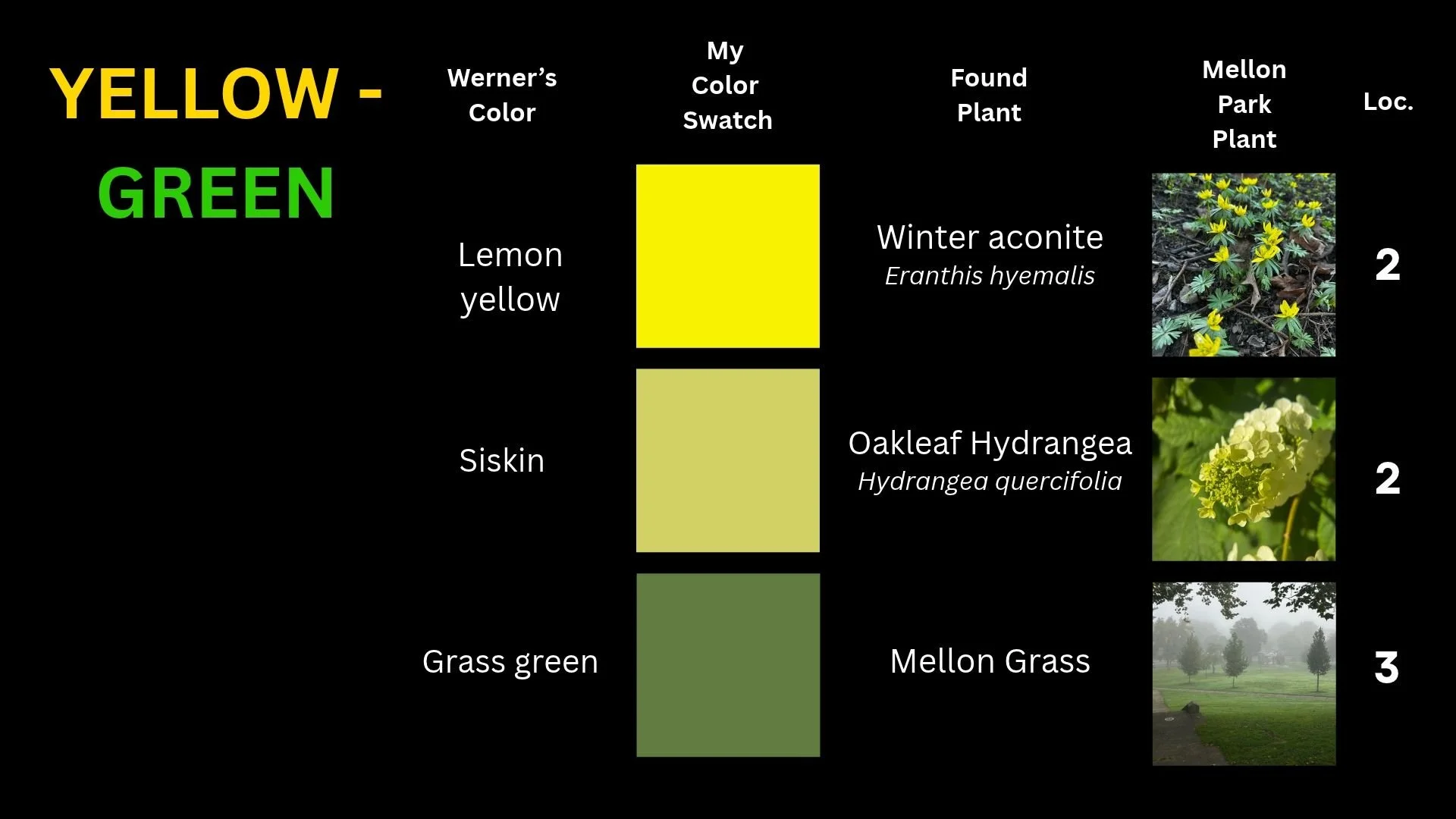
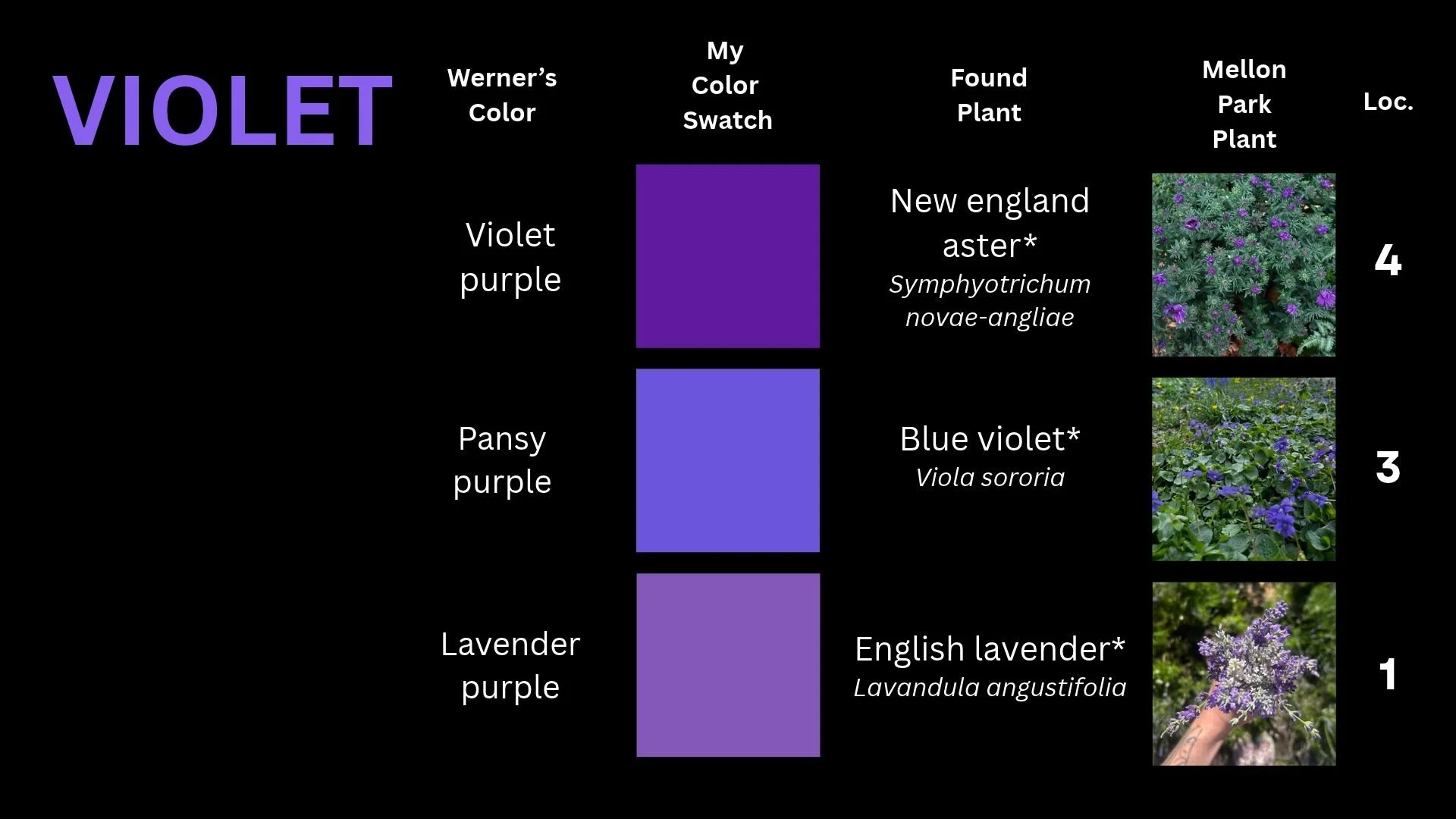
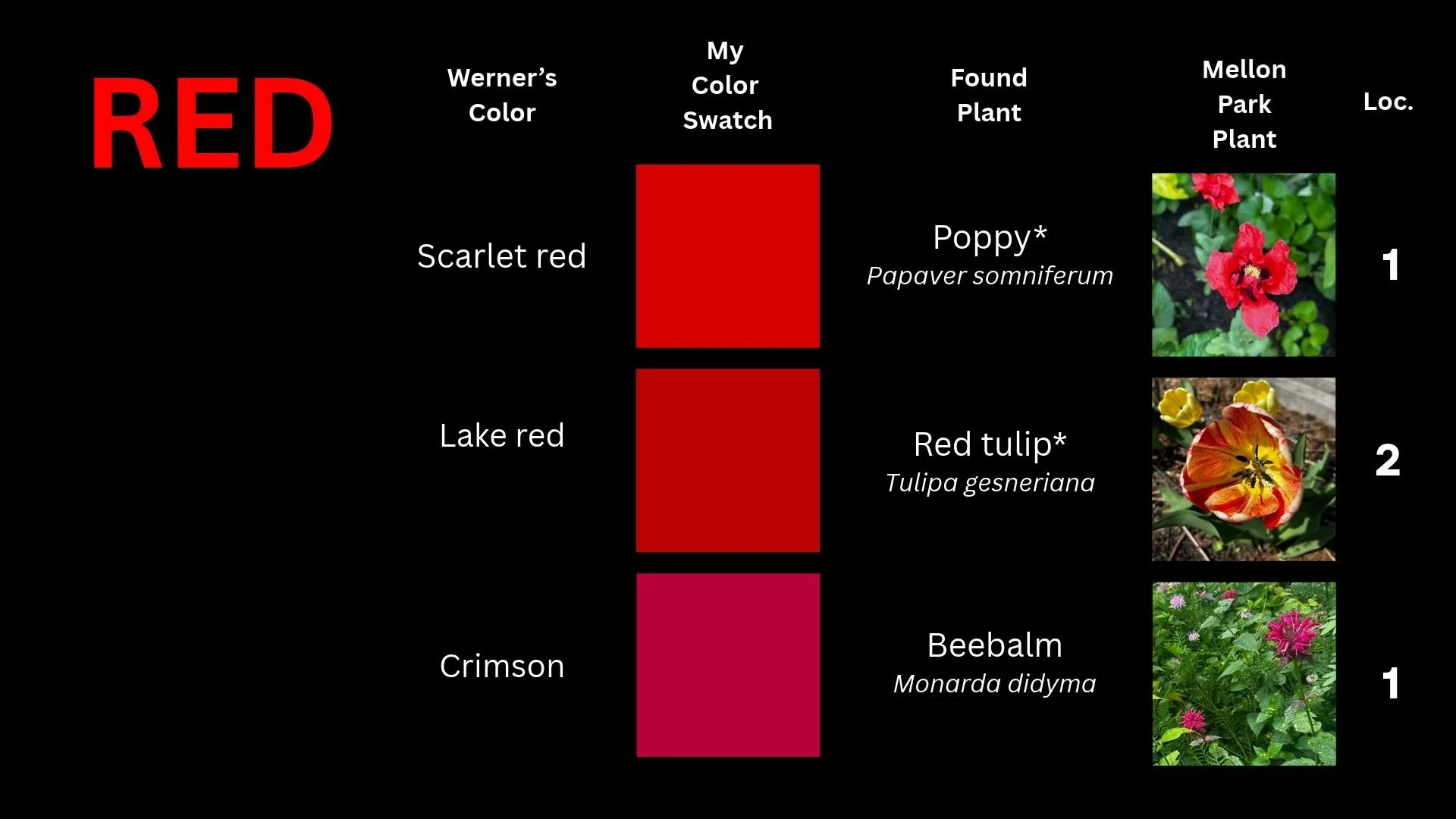
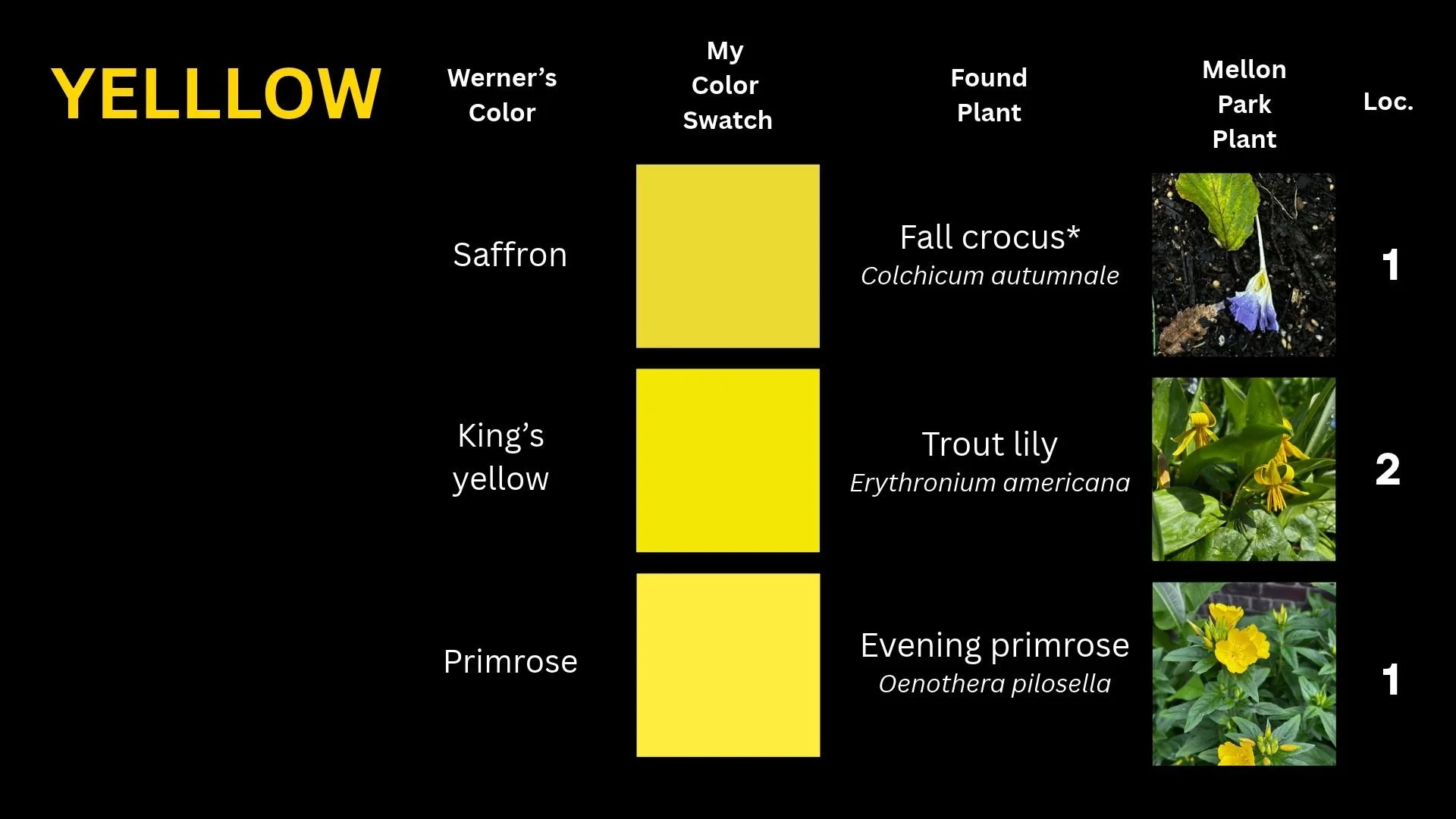
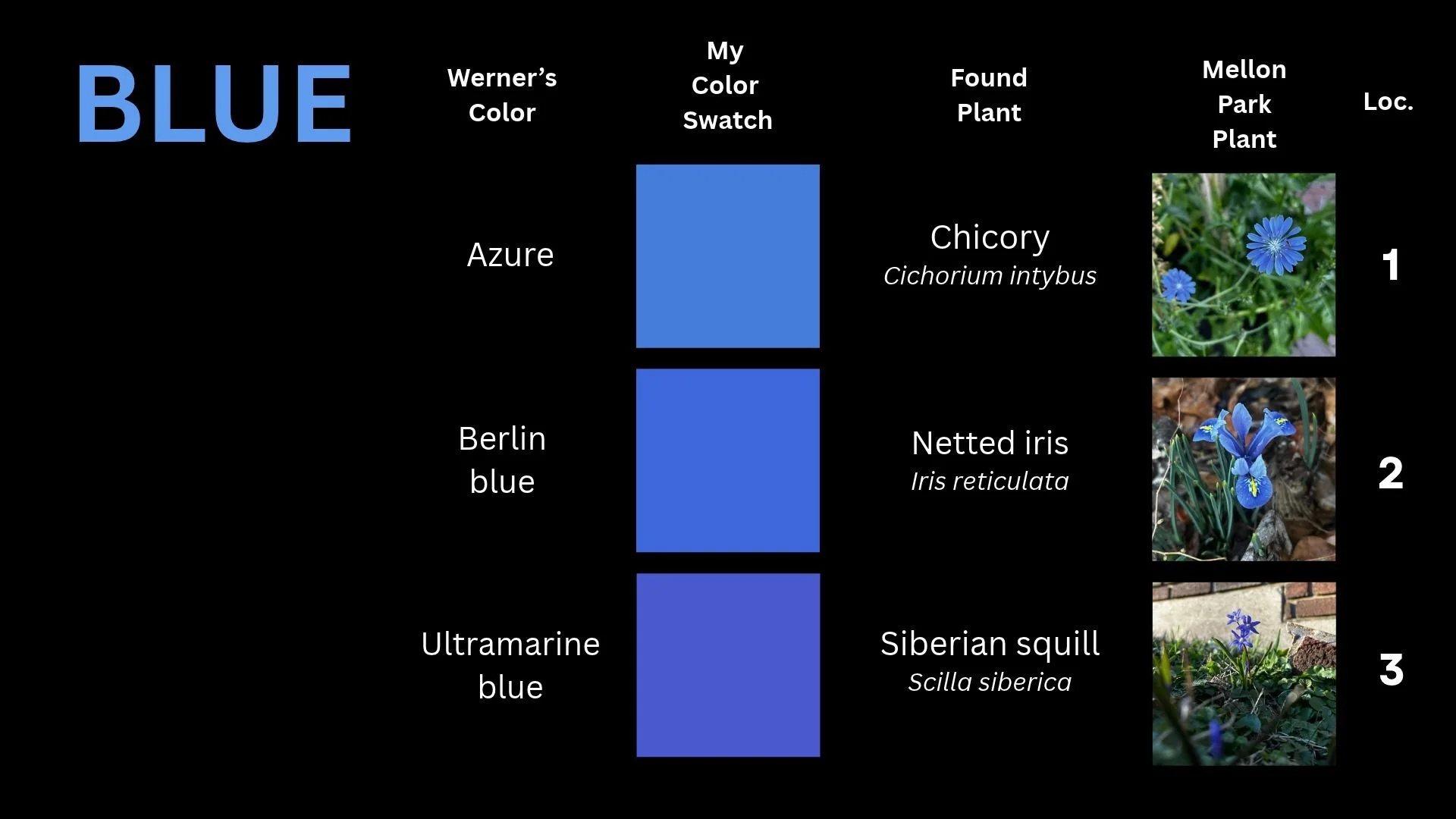
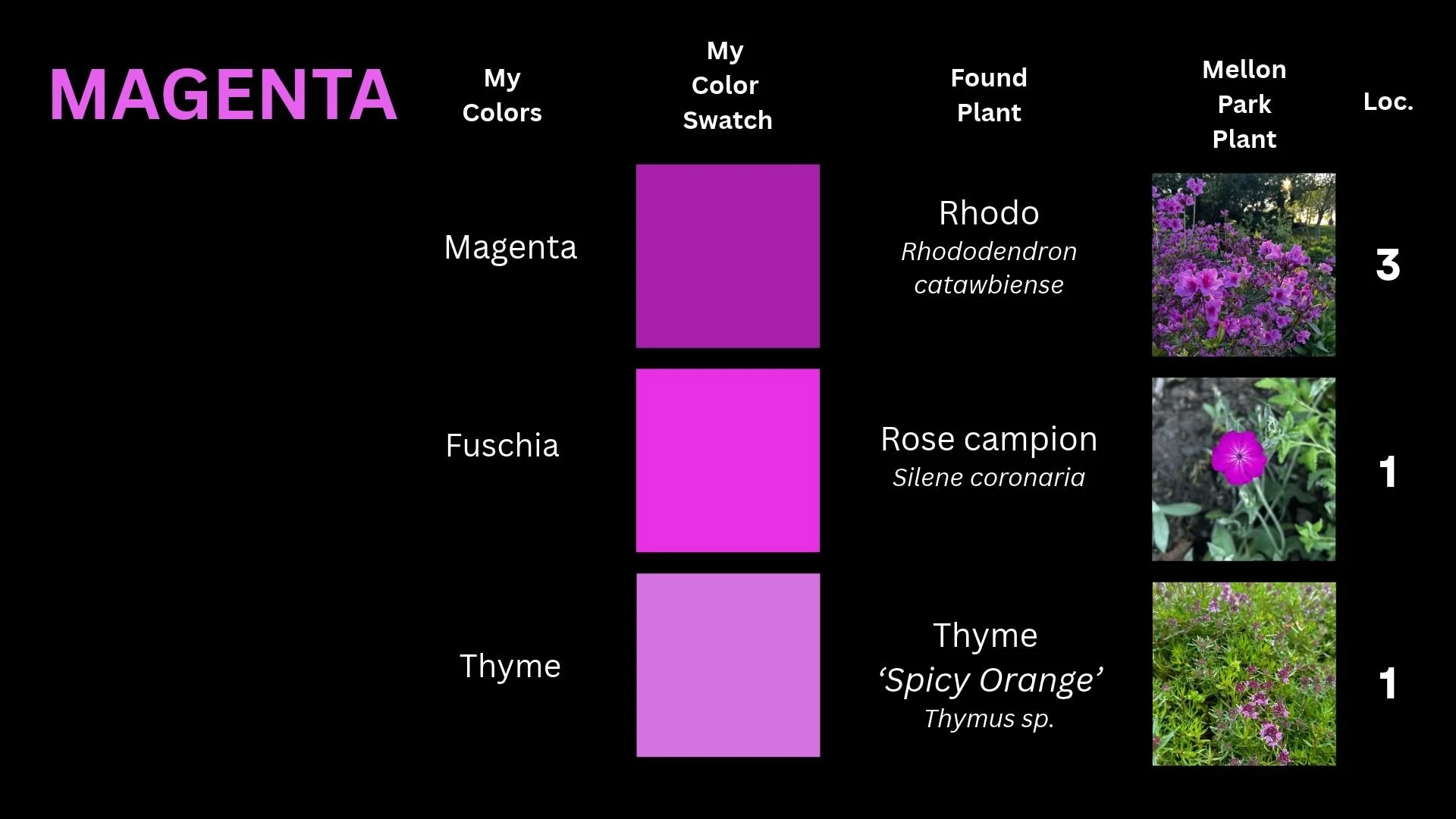
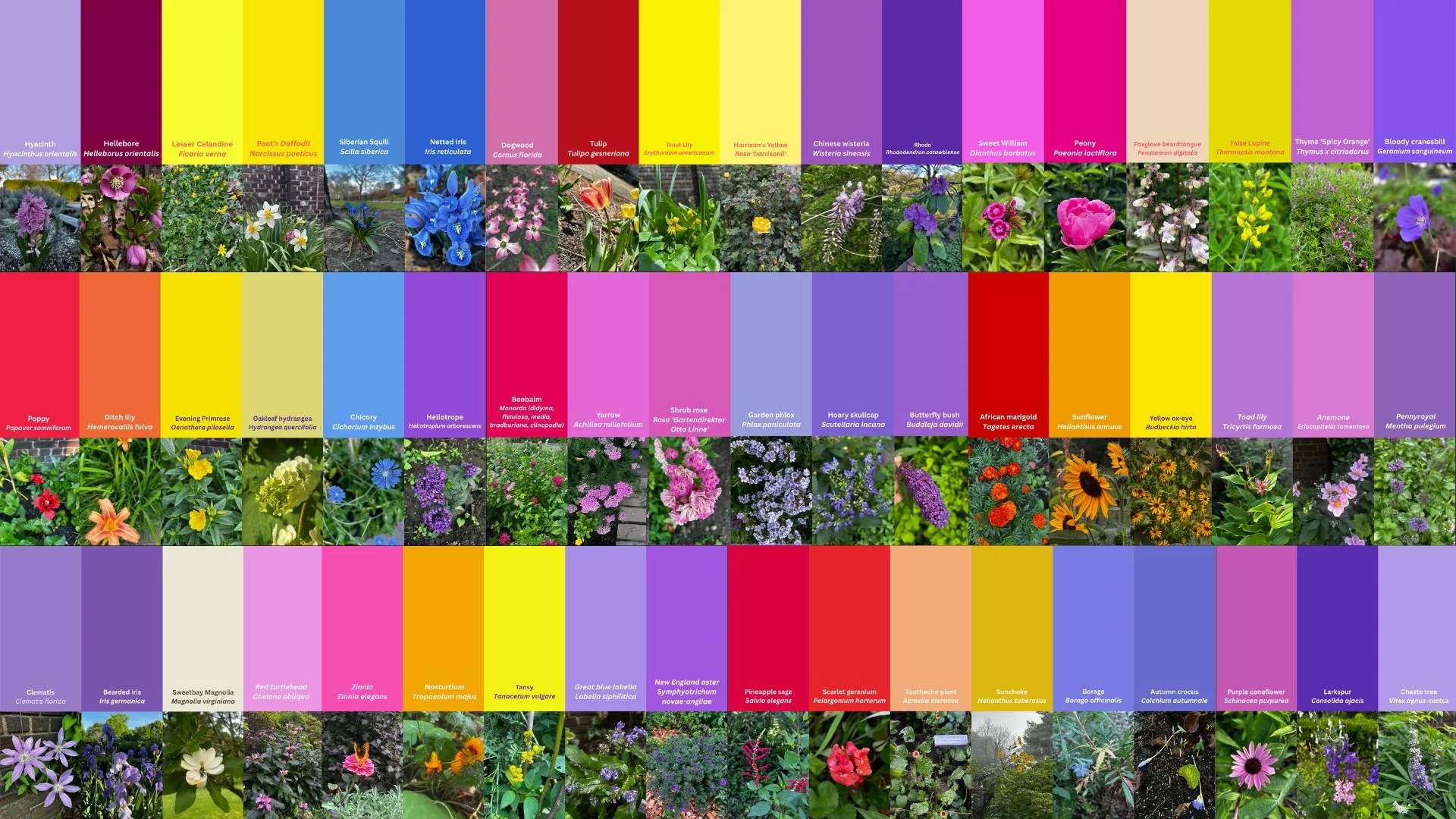
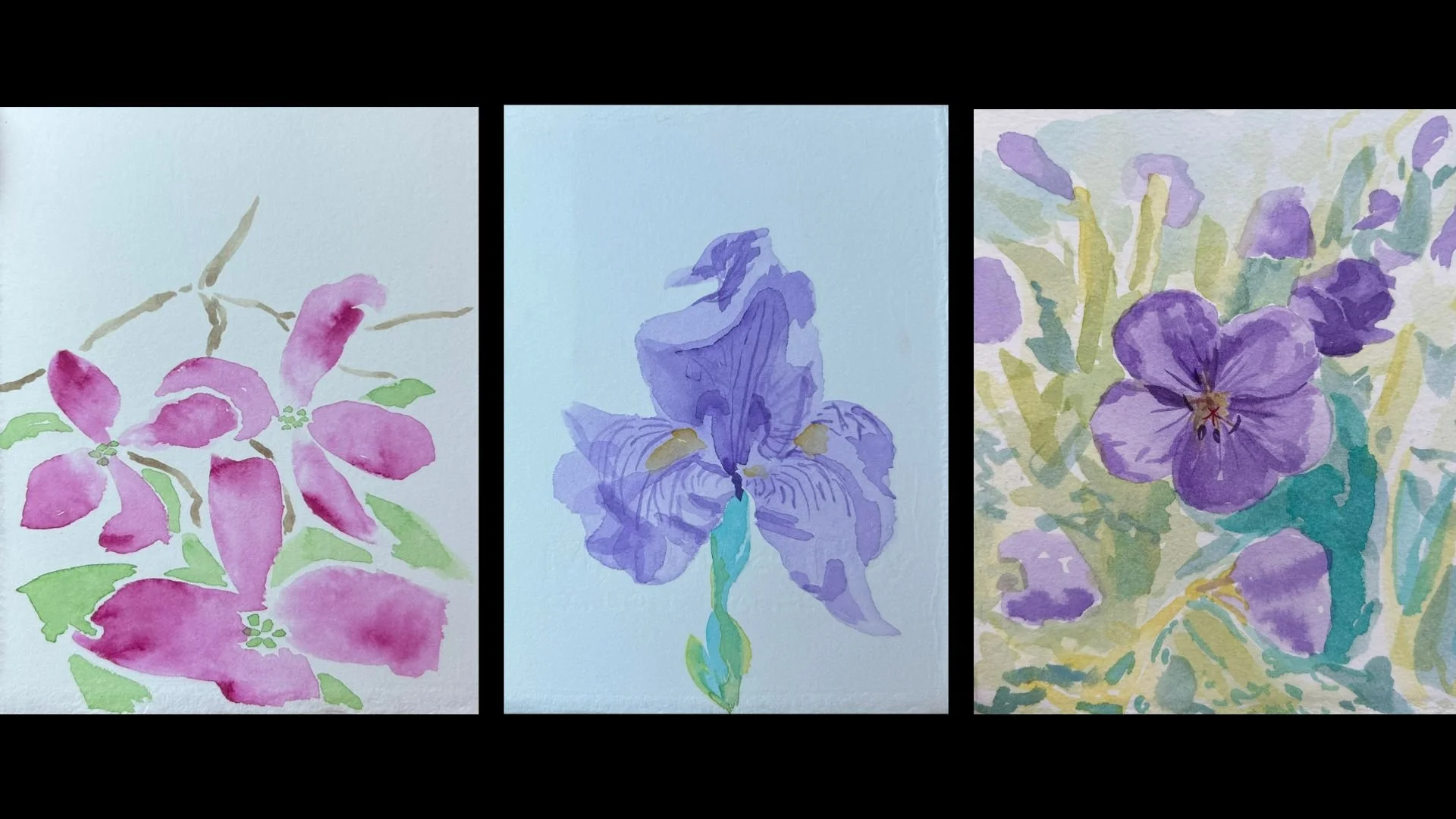
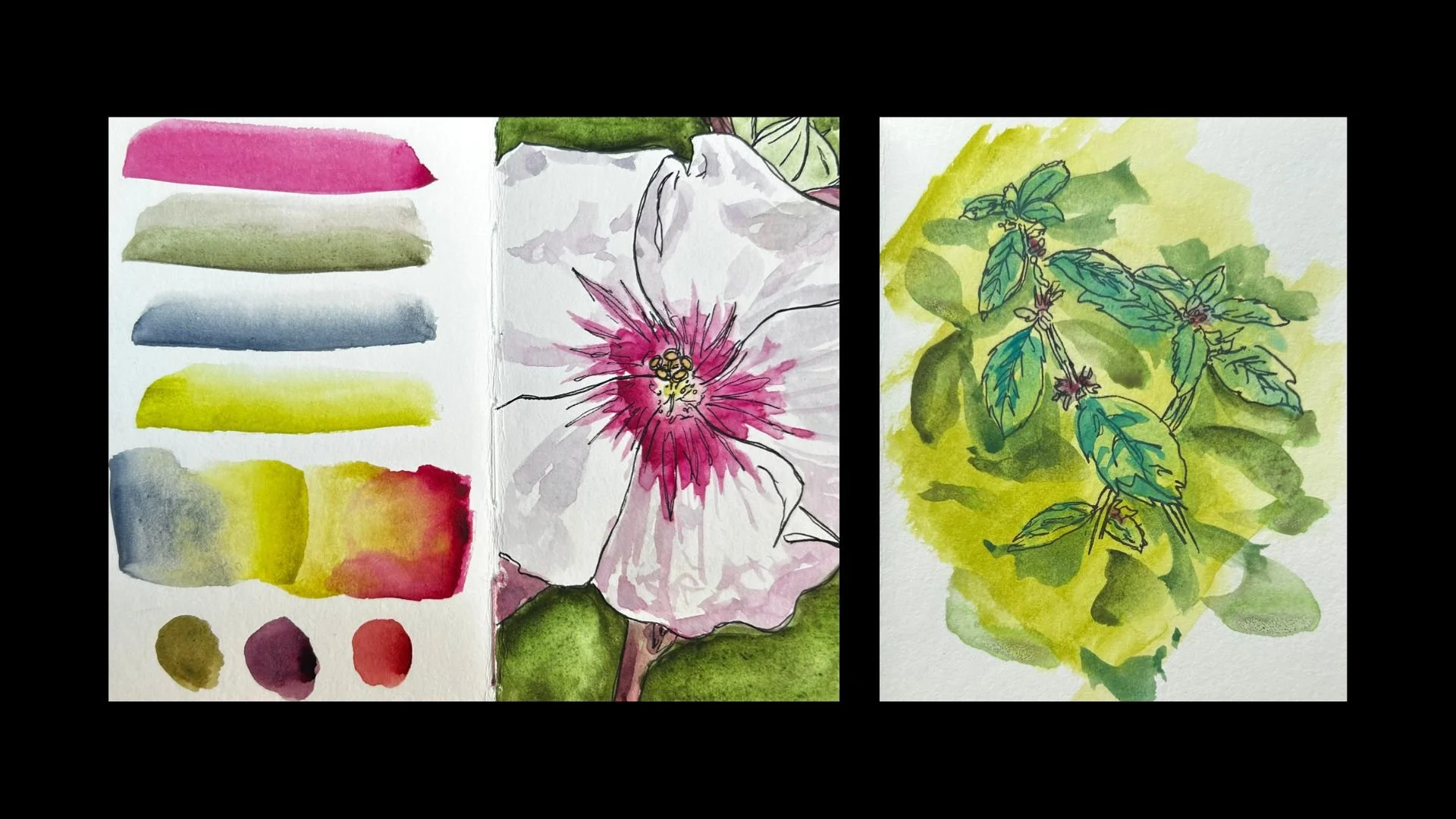
*Below, I reference an established categorization of colors - Werner’s Nomenclature of Colours: Adapted to Zoology, Botany, Chemistry, Mineralogy, Anatomy, and the Arts - which was first published 1814. Organized by Patrick Syme, it describes colors and attributes them to observed natural phenomena, like flowers. The marked Found Plants are Werner’s cited observations, meaning he described the color from the plant cited. All other plants were chosen through my own color bias for reasons such as accessibility and cultural preferences. For MAGENTA, the science did not exist to describe what I would consider a separate category from VIOLET so, I describe my own MAGENTAs based on colors from my culture.
Another note, I am red-green colorblind (most likely Deuteranomaly). Always open to feedback about color perception as mine is considered “deficient” but I do not believe in a universal need for standard color vision.